Many healthcare organizations assume everything is working because claims are being paid and revenue appears stable. This article explains why assumptions can create costly blind spots and how a proactive revenue cycle audit helps leadership validate performance before small issues become significant problems.
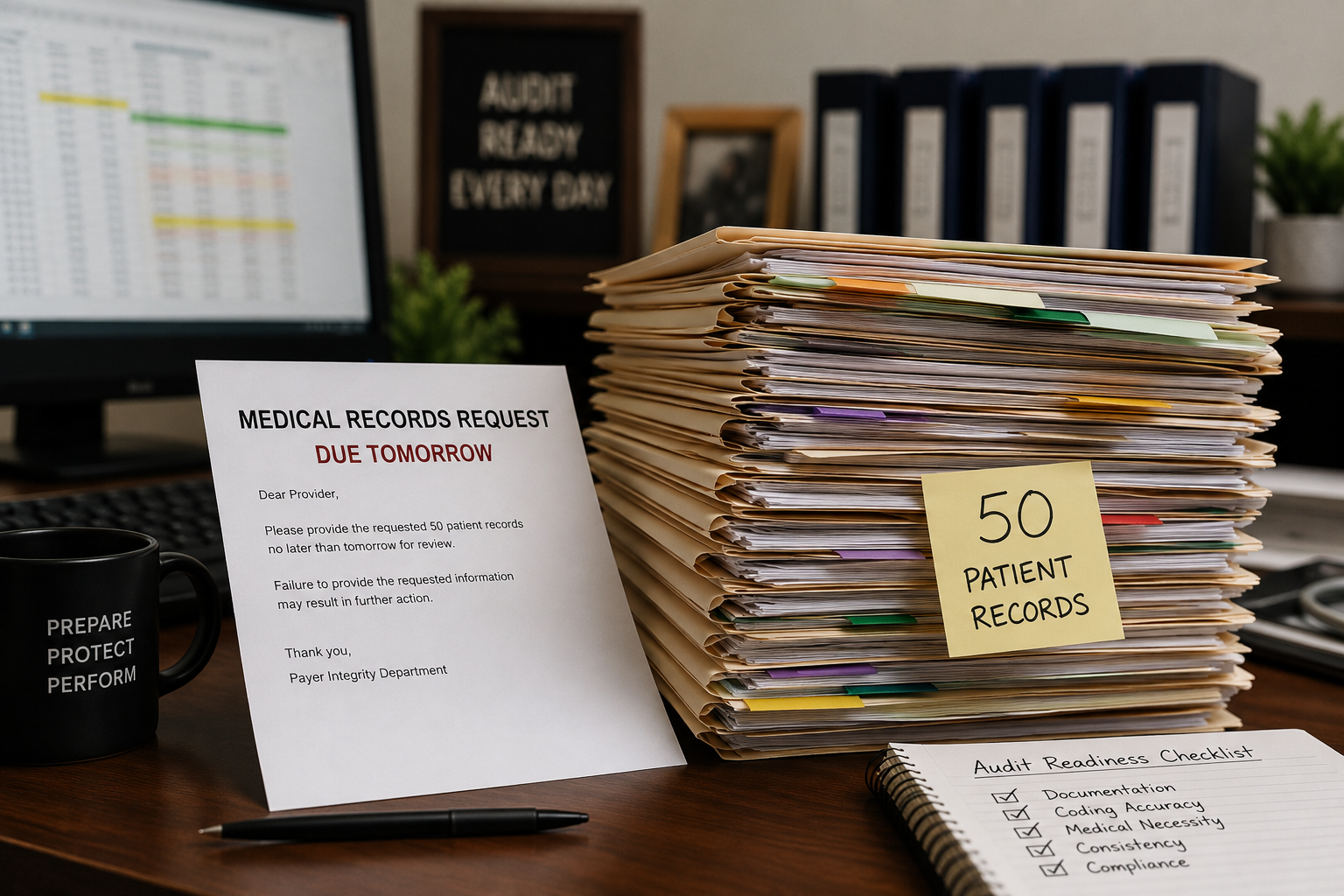
Imagine receiving a letter from a payer requesting 50 patient records for review.
Not next month.
Not next quarter.
Tomorrow.
Would your organization be ready? More importantly, would you be confident in what those records reveal?
For many healthcare leaders, the honest answer is, "I'm not sure." And that's exactly why proactive audits matter.
An Audit Doesn't Begin When the Letter Arrives
By the time a payer requests records, they've already identified a reason to take a closer look.
Whether it's unusual billing patterns, documentation concerns, coding trends, or data that falls outside expected benchmarks, the review didn't begin with the request.
The request is simply the next step.
At that point, your organization is no longer asking, "Are there any issues?"
You're being asked to demonstrate that your documentation, coding, and billing practices support the services you've billed.
What Would Those Records Say About Your Organization?
A payer isn't just reviewing individual encounters.
They're looking for patterns.
Questions they may ask include:
- Does the documentation support the level of service billed?
- Is medical necessity clearly documented?
- Are providers documenting similar services consistently?
- Are modifiers appropriately supported?
- Do coding practices align with payer guidelines?
- Are there recurring trends that suggest a larger issue?
One record may not tell the whole story.
Fifty records often do.
Would Your Team Be Prepared?
Responding to a payer audit takes more than pulling charts.
It often requires coordination between providers, coders, billing staff, compliance personnel, and leadership.
Questions quickly arise:
- Can records be located quickly?
- Is documentation complete?
- Are coding decisions defensible?
- Can your team explain why services were billed the way they were?
If those answers aren't clear before an audit, they become much more difficult to answer during one.
Confidence Comes From Preparation, Not Hope
Many organizations believe they're prepared because they haven't experienced significant problems.
Claims are being paid. Revenue is stable. Denials seem manageable. But payment doesn't always equal preparedness.
Some documentation deficiencies don't become apparent until someone reviews records with a different objective than simply processing a claim.
A proactive audit allows you to evaluate your records the same way a payer might—before they do.
A Proactive Audit Changes the Conversation
When organizations conduct an independent audit, they're not simply looking for mistakes.
They're asking more strategic questions:
- Are our providers documenting consistently?
- Do our coding practices support the services billed?
- Are we creating unnecessary compliance exposure?
- What patterns should leadership know about?
The goal isn't perfection.
The goal is understanding where risk exists while there's still time to address it.
Don't Let Your First Audit Be Someone Else's
Every healthcare organization faces oversight.
The difference is whether your first comprehensive review happens on your terms—or someone else's.
An independent audit provides the opportunity to identify vulnerabilities, strengthen processes, and improve documentation before an external review ever takes place.
It replaces uncertainty with confidence and assumptions with evidence.
Would You Be Ready Tomorrow?
If a payer requested 50 records tomorrow, would you feel confident handing them over?
If the answer is anything less than "absolutely," it may be time for a proactive review.
At AMS, our revenue cycle audits evaluate documentation, coding, workflows, and operational processes to help organizations identify potential risks before they become costly problems.
Because the best time to prepare for a payer audit is long before one is scheduled.
Ready to Evaluate Your Audit Readiness?
Don't wait until a payer asks the questions.
Find the answers first.
👉 Schedule a Revenue Cycle Audit Consultation with AMS
The strongest organizations don't prepare after receiving an audit request. They prepare before one ever arrives.
Frequently Asked Questions
What typically triggers a payer request for medical records?
Does a medical record request mean we've done something wrong?
How can our organization prepare for a payer audit?
Why is documentation consistency important during an audit?
Can paid claims still be questioned during a payer audit?
What does a proactive revenue cycle audit evaluate?
How can AMS help us prepare for a payer audit?