
As 2026 begins to wind down, healthcare leaders will start reviewing financial performance. Did revenue meet expectations? How do collections compare with last year? Where did expenses increase? What does the organization need to plan for in 2027? Those numbers are important, but they don't explain everything that happened inside your revenue cycle during the year. A year-end review is an opportunity to look behind the financial results and understand the operational trends that helped shape them.
Strong Collections Don't Tell You Everything
Collections are one of the first numbers leadership reviews, and for good reason. However, strong collections can exist alongside other trends that deserve attention. For example, an organization could meet its collection goals while older insurance A/R continues to grow. Another could experience revenue growth while the billing team spends more time correcting claims and appealing preventable denials.
Looking beyond total collections can help leadership determine whether revenue is being collected efficiently and whether current performance is sustainable. Questions to consider include:
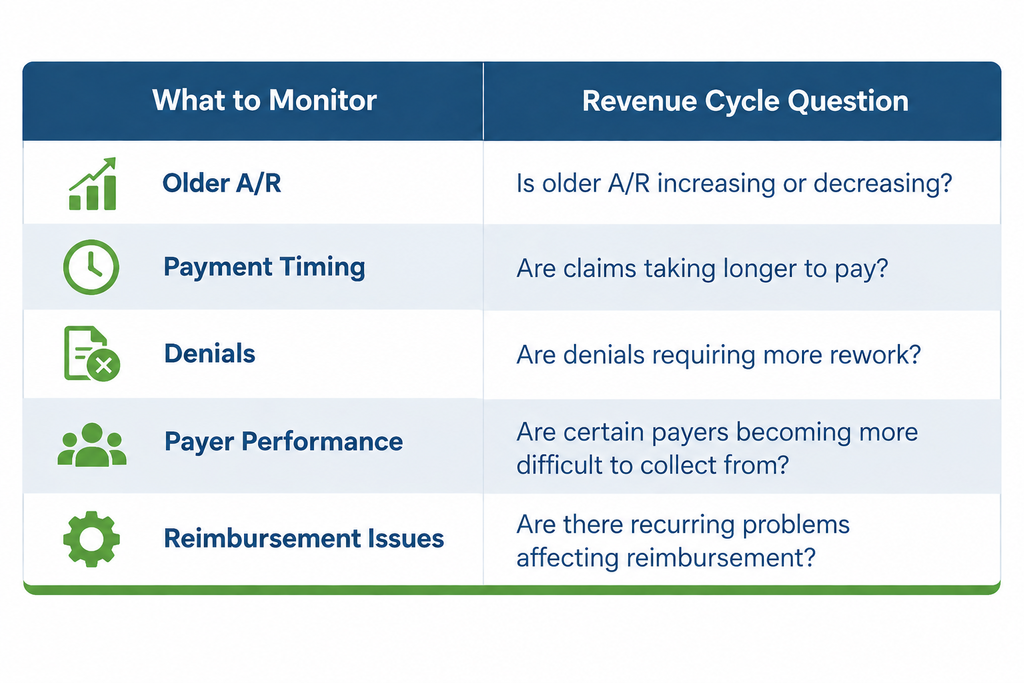
The answers provide context that a collection total alone cannot.
Look at What Required More Work This Year
Financial performance is only one part of the year-end story; operational effort matters too. If your billing team had to work more denials, submit more appeals, correct more claims, or repeatedly follow up on the same issues, leadership should understand why. A recurring authorization denial could begin with a front-end process. A documentation problem could delay coding and claim submission. A credentialing issue could affect reimbursement for a provider. Resolving the individual claim addresses the immediate issue: identifying why the problem continues to occur gives the organization an opportunity to improve the process.
Look for Patterns Across Providers and Payers
Organization-wide results can also make smaller patterns difficult to see. Year-end is a good time to look at performance from several perspectives. Are certain payers responsible for recurring denial or payment issues? Are there documentation or coding trends that suggest a provider may benefit from education? Are some locations or departments experiencing problems that others are avoiding?
A pattern does not automatically indicate that something is wrong. It does tell leadership where additional review may be appropriate. The goal is to identify meaningful differences, understand why they exist, and determine whether action is needed.
Consider What Changed During 2026
Revenue cycle results should also be considered alongside changes within the organization. Think about what happened during the year.
- Did you add providers or services?
- Did experienced employees leave?
- Did you add or terminate payer contracts?
- Were there credentialing or enrollment delays?
- Did denial patterns change?
- Were billing, coding, or front-office processes changed?
- Did your payer mix shift?
Then consider how those changes may have affected reimbursement, workload, A/R, denials, or cash flow. Connecting operational changes with financial trends can provide leadership with a clearer understanding of the year.
Decide What Should Follow You Into 2027
A year-end review should lead to decisions. Some processes may be working well and should continue, while others may need additional attention. Perhaps old A/R needs to become a priority. A recurring denial category may require a workflow change. Providers may benefit from targeted documentation education. A payer issue may need closer monitoring. Staff may need clearer responsibility for a particular part of the revenue cycle.
The goal doesn't have to be a long list of initiatives. Identifying a few meaningful opportunities and assigning responsibility for addressing them can give leadership a practical starting point for 2027.
Use 2026 to Make Better Decisions in 2027
Closing the books tells you how the organization finished the year; a thoughtful revenue cycle review can help explain how you got there. Look at collections, A/R, denials, payer behavior, documentation, coding, credentialing, and operational changes together. Then identify which trends deserve attention and which processes are producing the results you want.
Your 2026 experience can become useful information for the decisions you make next.
Frequently Asked Questions
What should healthcare organizations review at year-end besides revenue?
Why review revenue cycle trends when collections are strong?
Should revenue cycle performance be compared year over year?
What should leadership do with the findings from a year-end review?
Know What's Behind Your Numbers
Your year-end financial results are an important part of the story. Your revenue cycle can help explain how those results were produced and where opportunities for improvement may exist.
Applied Medical Systems helps healthcare organizations evaluate billing, coding, credentialing, payer performance, and revenue cycle operations. If you want a clearer picture of what's happening behind your 2026 numbers, contact AMS to discuss an end-to-end revenue cycle evaluation or targeted audit before setting your 2027 priorities.